


The content of this page is for informational purposes only. For diagnosis and treatment, please consult your doctor.
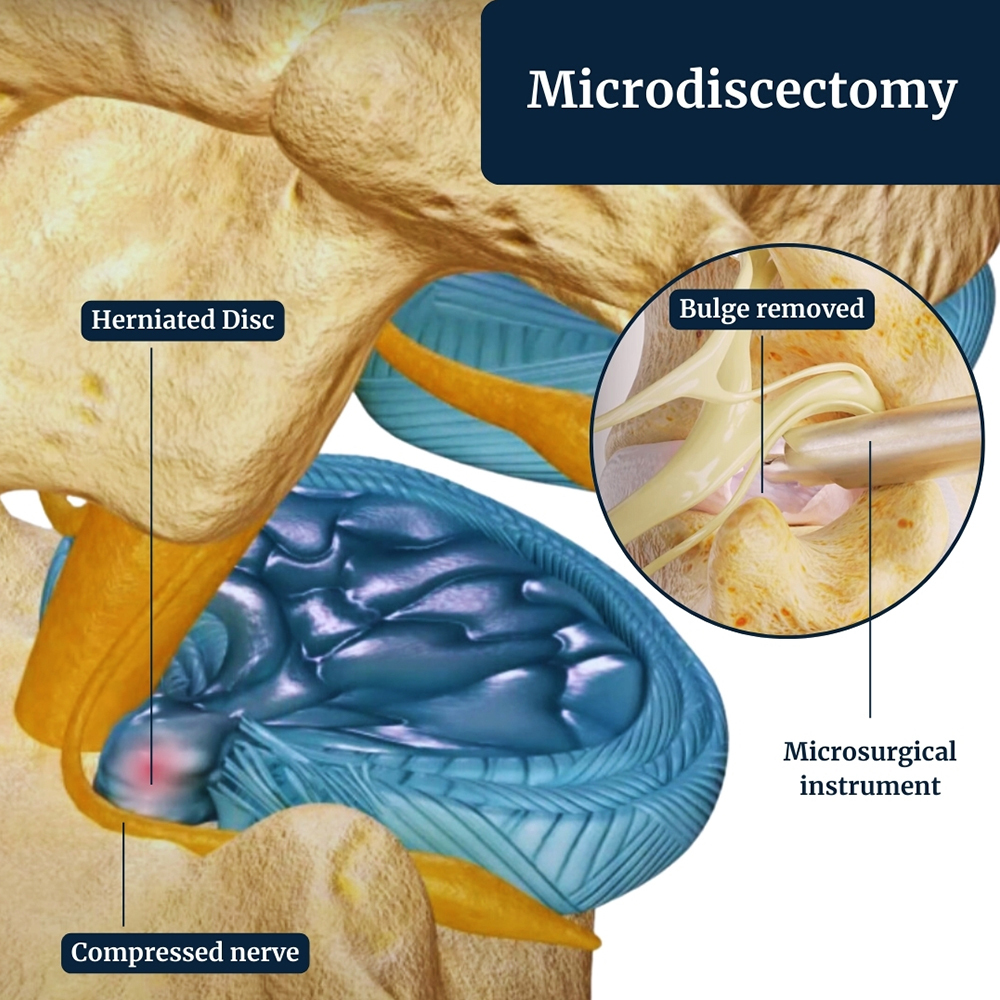
This method allows for the removal of only the herniated disc material that has extruded and is compressing the nerves, without compromising the stability of the spine. By relieving the nerve compression, it helps achieve rapid improvement in the patient’s pain symptoms. At the same time, by preserving the disc capsule, it contributes to maintaining the spine’s load-bearing capacity and allows the stem cells within the capsule to support the restoration of the disc space to its previous structure.
The most important advantage of minimally invasive microdiscectomy for lumbar and cervical disc herniation is the following:
In cervical disc herniation, since the disc space is filled with a ceramic filling material during surgery, the likelihood of recurrence does not exist. In lumbar disc herniation treated with microdiscectomy, although there is an approximately two percent chance of recurrence, the same procedure can be repeated, allowing the treatment process to continue and the patient to regain health without the use of any implant or screw (commonly referred to as “platinum”).